One room, three teaching pictures
These generated illustrations suggest different ways a scene can become harder to use. The person living with sight loss is the expert on their own experience.

Cataracts
When light washes out detail
A clock, a book spine or a label gets harder to make out when detail and contrast drop. This picture combines two ideas relevant to cataracts.
Read the condition guide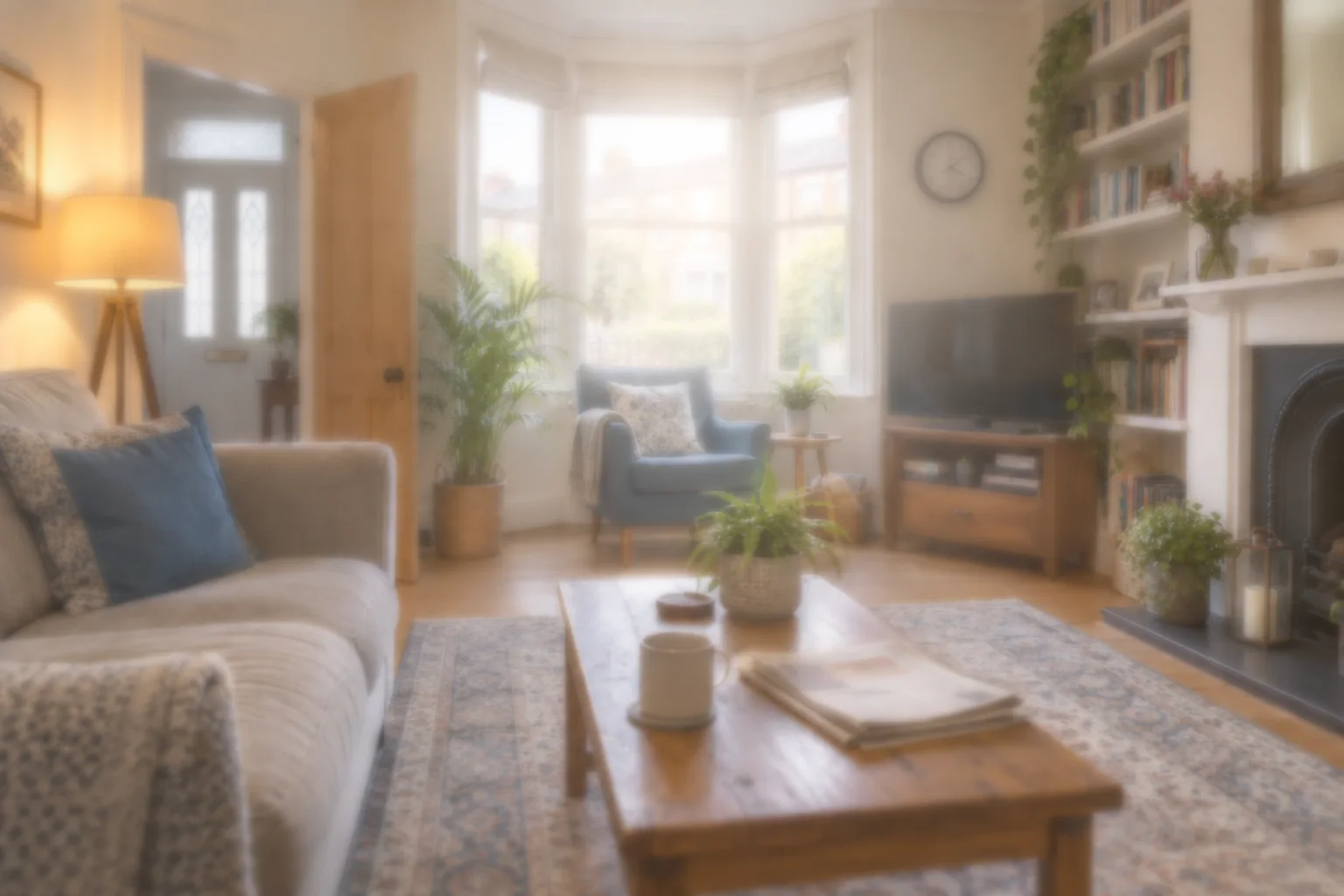
Illustration hidden. A clock, a book spine or a label gets harder to make out when detail and contrast drop. This picture combines two ideas relevant to cataracts.
Retinitis pigmentosa
When the edges give less information
The object you look at stays visible while the doorway and the room edges are harder to use. This is a teaching picture for side-vision changes, not how every person with RP sees.
Read the condition guide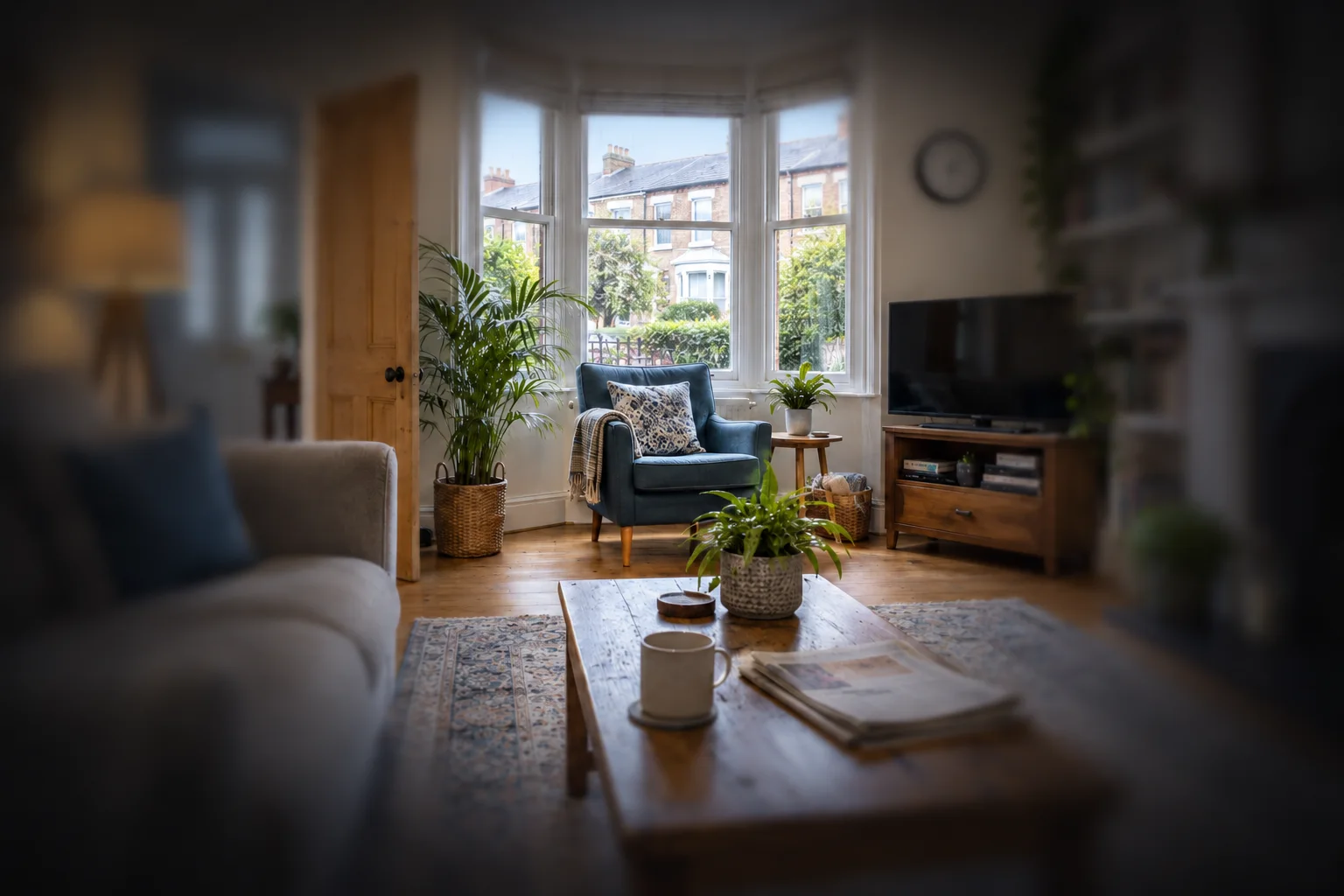
Illustration hidden. The object you look at stays visible while the doorway and the room edges are harder to use. This is a teaching picture for side-vision changes, not how every person with RP sees.
Macular degeneration
When the detail you look at is unclear
Reading a word or recognising a face uses detailed central vision. This picture suggests the kind of central-detail difficulty found in macular conditions.
Read the condition guide
Illustration hidden. Reading a word or recognising a face uses detailed central vision. This picture suggests the kind of central-detail difficulty found in macular conditions.
Generated images can change small details in the scene. For a consistent reference, the live explorer applies adjustable effects to the original image. Neither format is diagnostic or a substitute for asking someone what they see.