How to read your glasses prescription
What SPH, CYL, AXIS, ADD, PRISM and PD mean, what the plus and minus signs tell you, and what you can do with the piece of paper.
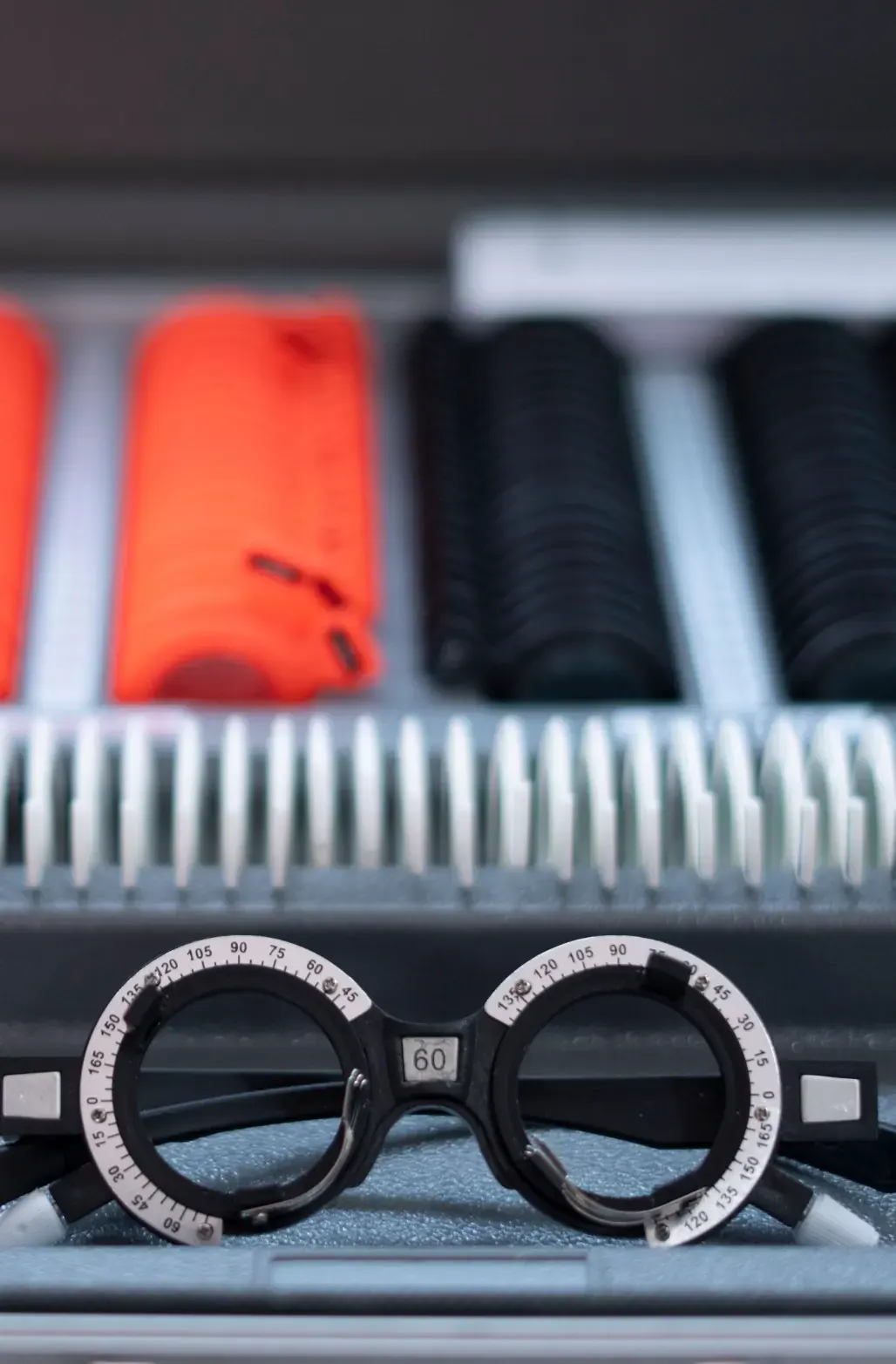
The boxes on the sheet
Each eye gets its own line. R or OD is your right eye. L or OS is your left eye. The columns are the same for both.
- SPH (sphere)
- The main lens power, in dioptres (D). A minus number corrects short sight. A plus number corrects long sight. 0.00, "plano" or "infinity" means no power is needed. Steps are 0.25. The further from zero, the stronger the lens.
- CYL (cylinder)
- The extra power needed for astigmatism, where the eye focuses differently in different directions. A blank box or "DS" means no astigmatism is being corrected.
- AXIS
- Where the cylinder sits, from 1 to 180 degrees. It only appears when there is a CYL value. It is a direction, not a strength.
- ADD (addition)
- Extra plus power for reading, added to the distance prescription in bifocals, varifocals or reading glasses. It is usually only needed from about 45 onwards, as the focusing ability of the eye declines with age (presbyopia).
- PRISM and BASE
- Only some people have these. A prism shifts the image to help the two eyes work together, for example with double vision. BASE gives the direction: up, down, in or out.
- PD (pupillary distance)
- The distance between the centres of your pupils in millimetres, so the lenses line up with your eyes. Opticians do not always print this. Ask, or measure it, before buying online.
- VA (visual acuity)
- How well you read the chart with the lenses in, often written as 6/6. The test distance in the UK is 6 metres. 6/6 means you see clearly at the standard level. 6/12 means you need to be at 6 metres to see what most people see from 12.
Reading an example
Right eye: SPH -2.50, CYL -0.75, AXIS 90. This eye is moderately short-sighted with a small amount of astigmatism. Left eye: SPH +1.00, ADD +2.00. This eye is a little long-sighted, and the person needs an extra +2.00 for reading, so bifocals, varifocals or a separate pair of reading glasses would help.
Strong, mild or moderate?
There is no official scale, and the same numbers feel different to different people. As a rough guide, many optometrists call anything up to about 3 dioptres mild, 3 to 6 moderate, and over 6 high. Lenses of -10 or +10 or more, or prism-controlled bifocals, count as complex lenses for the NHS complex lens voucher.
What you can do with it
- Take it to any opticians, high street or online. Your optometrist must give it to you.
- Keep a photo of it on your phone, so you have it if glasses break on holiday.
- Compare it with your last one. A big jump between tests, or a change which keeps coming, is worth asking about.
- Contact lenses need a separate specification after a fitting. A glasses prescription is not enough to buy lenses.
Children's prescriptions
Children are often tested after drops which relax focusing, so the numbers can look higher than an adult's for the same vision. Small plus prescriptions in young children are common and often need no glasses. The optometrist explains what matters for your child.
Short-sightedness guide Long-sightedness guide Presbyopia and reading glasses Glasses costs and NHS vouchersCommon questions
Is a minus number short sight?
Yes. A minus SPH means the lens pushes the focus back, which corrects short-sightedness. A plus SPH corrects long-sightedness or helps with reading.
Can I buy glasses anywhere with my prescription?
Yes. The optometrist must give you your prescription after a sight test, and you can take it to any opticians or online seller. Online sellers usually need your pupillary distance too, which is not always printed.
How long is a prescription valid?
The optometrist writes a recall date, usually 2 years for adults and less for children or people with eye conditions. Sellers may refuse to dispense from an older prescription.
Sources
- NHS: opticians and eye tests
- NHS: free NHS eye tests and optical vouchers (complex lens definition)
- College of Optometrists (Look After Your Eyes): your optical prescription
Checked 4 October 2026. Official pages change, so follow the NHS page for the current position.
- Written by
- The Omnirx.io team, from the NHS pages above
- Sources checked
- Page updated
- Next review due
- Clinical review
- Not yet
Was this page useful?
Cite this page
Glanced (2026) How to read your glasses prescription. Omnirx.io team for Medstack Ltd. Available at: https://www.glanced.co.uk/nhs/prescription/ (Accessed: ).
Educational information, not medical advice. Your own eye-care team's advice comes first.