Your eyes after 60
Free sight tests every two years, the conditions which become common with age, the family glaucoma rule, dry eyes, lighting and falls.
Free tests, every two years
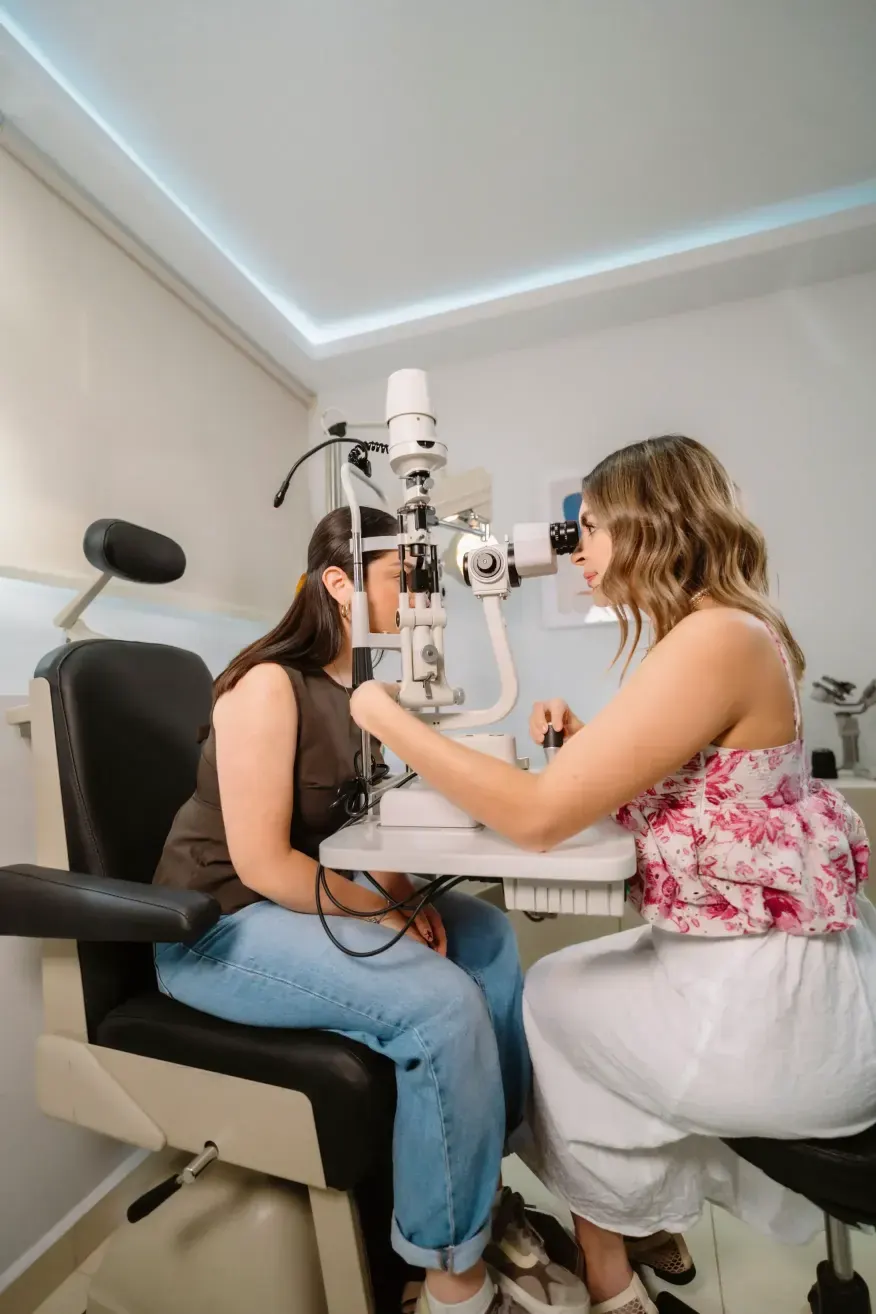
From 60 you get a free NHS sight test, usually every 2 years, or more often if the optometrist recommends it. The test checks the health of the eye as well as your glasses, so go even if you see well. If something changes before the next test is due, book one early. The optometrist can do it on the NHS when it is clinically necessary.
What becomes common
- Cataracts: the lens clouds slowly, with glare, faded colours and trouble in dim light. Surgery replaces the lens when it affects your life.
- Age-related macular degeneration: affects the middle of your vision from the 50s on. It does not cause total blindness. Straight lines going wavy or a smudge in the centre need a prompt check, because the wet form is treatable if caught early.
- Glaucoma: damage to the optic nerve, usually with no early symptoms, found at sight tests. Family history raises the risk.
- Posterior vitreous detachment: the gel inside the eye pulling away, causing floaters and flashes. Harmless in itself, but checked within 24 hours because the symptoms match a retinal tear.
- Dry eyes: more common over 50, with some medicines and in heated rooms.
Giant cell arteritis: a new headache after 60
A new headache at the temples, a tender scalp, or jaw pain when chewing can be giant cell arteritis, which can take the sight in days. Contact your GP urgently, and treat any sudden sight change as an emergency even if it returns.
Lighting, contrast and falls
An older eye needs more light and more contrast. Brighter bulbs, a lamp aimed at the page, a dark strip on step edges, a dark mat under a pale plate and good lighting on stairs make a real difference and cut the risk of falls. Keep glasses prescriptions current, and use the right pair for the task.
Medicines and your eyes
Some blood pressure tablets, antidepressants and antihistamines dry the eyes, and steroid tablets or inhalers can raise eye pressure and speed up cataracts. Tell your optometrist what you take, and never stop a prescribed medicine without advice.
Driving
Many people drive well into their 80s. You must still read a number plate at 20 metres and reach 6/12 with your glasses, and you must tell DVLA about conditions which affect both eyes. From 70 you renew your licence every three years and declare your health.
Seeing things which are not there
After a large loss of sight, some people see patterns, people or animals which are not real. This is Charles Bonnet syndrome, not dementia or a mental health problem. Tell your GP so other causes are ruled out, and tell your family what it is.
Cataracts guide Macular degeneration guide Glaucoma guide Free sight tests and help with glassesCommon questions
How often should I have a sight test after 60?
Every 2 years on the NHS, free, or sooner if the optometrist recommends it. If you are worried before the next test is due, go in. The optometrist can do an NHS test early if it is clinically necessary.
Does age-related macular degeneration make you blind?
No. The NHS says AMD does not cause total blindness. It affects the middle of your vision, which makes reading and faces harder, while side vision stays. Without treatment it can worsen slowly over years and then quickly over weeks, which is why new distortion needs a prompt check.
My parent had glaucoma. Does that matter?
Yes. If you are 40 or over and a parent, sibling or child has glaucoma, you get a free NHS sight test, and the optometrist will check your eye pressure and field.
Sources
- NHS: how often can I have a free NHS sight test
- NHS: age-related macular degeneration
- NHS: free NHS eye tests and optical vouchers
- NHS: dry eyes
- RNIB: giant cell arteritis
Checked 4 October 2026. Official pages change, so follow the NHS page for the current position.
- Written by
- The Omnirx.io team, from the NHS pages above
- Sources checked
- Page updated
- Next review due
- Clinical review
- Not yet
Was this page useful?
Cite this page
Glanced (2026) Your eyes after 60. Omnirx.io team for Medstack Ltd. Available at: https://www.glanced.co.uk/nhs/over-60/ (Accessed: ).
Educational information, not medical advice. Your own eye-care team's advice comes first.